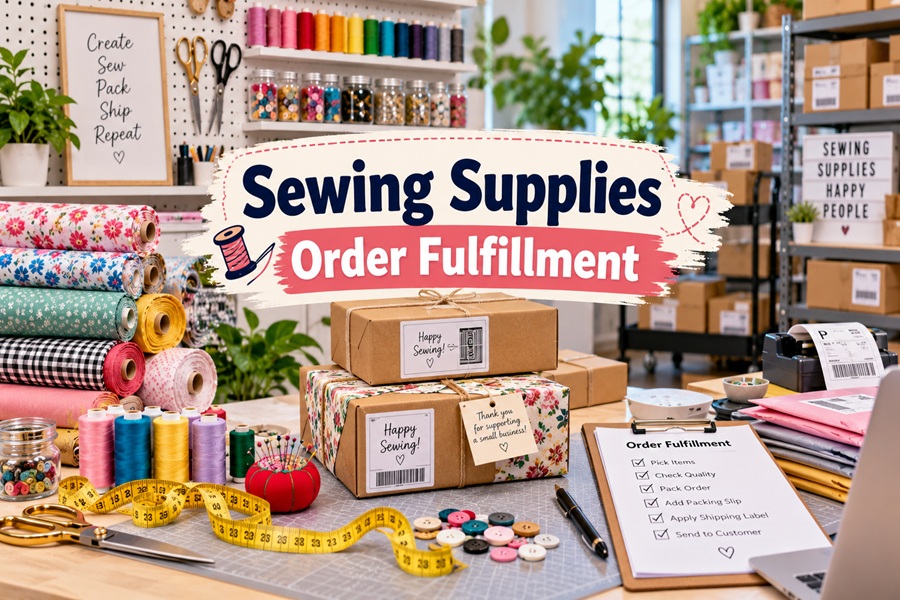
Category: Business

  • Packing Pins and Fabric Bolts Is Harder Than It Looks for Sewing Supply Sellers

    Packing Pins and Fabric Bolts Is Harder Than It Looks for Sewing Supply Sellers

    A quilter in Oregon orders three fat quarters, a spool of thread in a very specific shade of sage, a pack of size 90 needles and a rotary cutter blade. The whole order weighs less than a pound and costs under $40. To the warehouse, though, it is four completely different handling problems in one small envelope.

    That is the reality of fulfilling sewing supplies. The products are cheap, small and endlessly varied, and customers care about details that most general warehouses never think about. Sellers who get fulfillment right in this niche usually build fiercely loyal customers. Those who treat it like generic ecommerce tend to drown in returns and complaints.

    Why This Category Breaks Ordinary Warehouse Habits

    Most fulfillment setups are built around products that come in a few sizes and ship in standard boxes. Sewing and craft supplies do the opposite.

    SKU counts explode quickly. One thread line can include hundreds of colors. Buttons come in sizes, finishes and pack counts. A modest online notions shop can easily carry thousands of SKUs.

    Items are tiny. Snaps, needles, bobbins and zipper pulls get lost in a standard pallet location. They need small bins, drawers or shelving with clear labels.

    Colors look alike. Navy and midnight, ivory and cream, sage and seafoam. A picker under warehouse lighting can mix them up easily, and the customer will notice instantly.

    Some products are sharp. Needles, pins, seam rippers and rotary blades can puncture packaging and injure people handling the parcel.

    Fabric often needs cutting. Selling fabric by the yard or half yard means someone has to measure and cut accurately for every order.

    Storage That Matches the Products

    A well organized sewing supply warehouse looks more like a pharmacy than a big box stockroom.

    • Bin shelving with dividers keeps notions sorted by type, size and color.
    • Barcode labels on every bin reduce guessing between similar shades.
    • Color families stored together but separated by clear labels make picking faster without encouraging mix ups.
    • Bolt racks keep fabric flat and wrinkle free, ideally away from direct sunlight that can fade color.
    • Climate control protects elastic, fusible interfacing and adhesive products that degrade in heat or humidity.

    The Dye Lot Detail Customers Notice

    Fabric and yarn are dyed in batches called dye lots, and two lots of the “same” color can look slightly different. A customer who orders four yards for a dress and receives two yards from one lot and two from another may see a visible shade difference once sewn.

    Good fulfillment tracks lots at the inventory level and fills multi yard orders from a single lot. When that is not possible, the best sellers email the customer before shipping rather than letting them discover it later. This one habit prevents a surprising number of returns.

    Cutting Fabric Is a Service, Not a Pick

    Many third party logistics providers will not cut fabric at all. It requires a cutting table, trained staff and a clear policy for small variances. If you sell cut yardage, you have three realistic paths.

    1. Cut in house and use a 3PL only for prepackaged notions, patterns and kits.
    2. Precut common lengths such as fat quarters, one yard and two yard pieces, then store them as individual SKUs a warehouse can handle.
    3. Find a specialized textile fulfillment partner experienced with measuring and cutting.

    Precutting is the easiest bridge for growing shops. Fat quarter bundles and precut packs are also popular with quilters, so the operational fix doubles as a merchandising idea.

    Kits and Bundles Change the Workflow

    Sewing kits, quilt kits and project boxes sell well because they remove guesswork for beginners. They also add an assembly step called kitting. Someone has to gather fabric, pattern, thread and notions into one package before or during order processing.

    Pre building popular kits during slow periods keeps peak season moving. For subscription boxes, a fixed assembly schedule each month avoids last minute scrambles.

    Packing for Small, Sharp and Light

    Most sewing orders are lightweight, which keeps shipping affordable when packaging is right sized.

    • Padded or poly mailers work for fabric, thread and soft notions.
    • Rigid mailers or small boxes protect paper patterns and anything that should not bend.
    • Sharps go in a sealed sleeve or small rigid case before entering the mailer. Needles and blades should never ride loose.
    • Fabric goes in a clear bag inside the mailer to guard against moisture and dirt.
    • Fold fabric neatly rather than stuffing it, so customers are not greeted by deep creases.

    In the U.S., many orders under a pound fit USPS Ground Advantage pricing, which keeps postage low for small parcels. Heavy orders such as full bolts or batting rolls are better quoted separately so you do not lose money on shipping.

    Seasons and Spikes to Plan For

    Demand in this niche follows its own calendar.

    • Fall and the holidays bring gift making, costume sewing and holiday quilts.
    • Back to school lifts beginner kits and basic notions.
    • New collection drops from popular fabric designers can sell out in hours and create sudden order surges.
    • Social media trends can turn a single pattern or technique viral overnight, emptying stock of one specific notion.

    Preorders help with designer releases. Setting realistic ship dates on preorder items protects your reputation when a manufacturer’s delivery slips.

    In House or a Fulfillment Partner?

    Small sewing shops often stay in house longer than other ecommerce brands, and that is reasonable. Color accuracy, cutting and personal touches are hard to outsource. A hybrid approach often works best. Prepackaged notions, patterns, books and tools go to a 3PL, while cut fabric and custom kits stay with the owner.

    When interviewing a fulfillment partner, ask whether they already work with craft or textile brands, how they handle small parts storage, whether they track lots and what their pick accuracy rate is. A provider used to shipping supplements and phone cases may not understand why “close enough” on a thread color is not close enough.

    The Small Touches Crafters Remember

    Sewing customers are makers, and they tend to share their purchases online. A neatly folded fabric bundle tied with a strip of selvage, a small swatch card or a printed tip about prewashing costs very little. It turns an ordinary delivery into something worth posting.

    In a niche full of small products, fulfillment is where a shop proves it understands its customers. Get the color, the cut and the packing right, and the quilter in Oregon will come back for the next project.
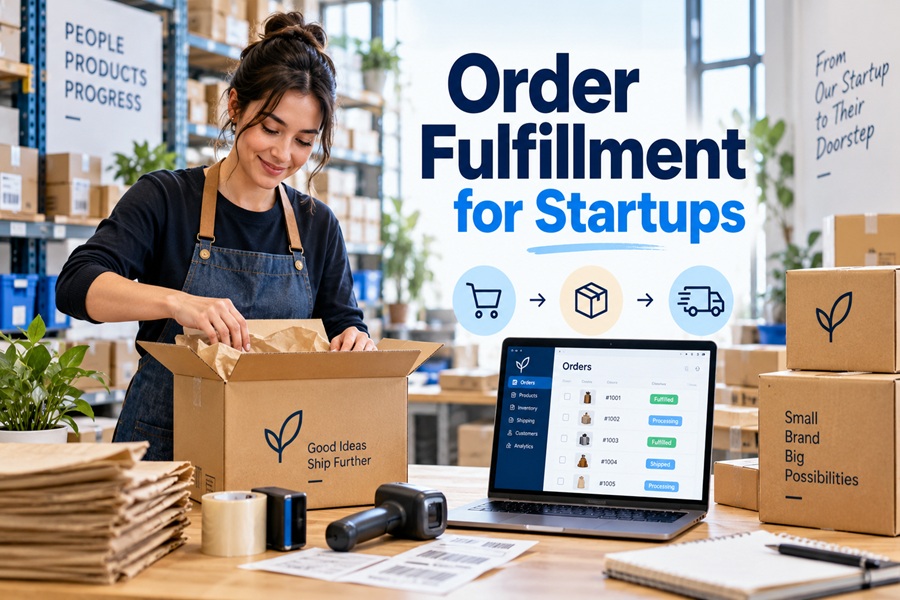
  • From Garage Shelves to a 3PL Warehouse in Startup Order Fulfillment

    From Garage Shelves to a 3PL Warehouse in Startup Order Fulfillment

    Nobody starts a brand because they love packing tape. Yet for most product startups, fulfillment often decides whether customers come back. A late box, a crushed product or a surprise shipping fee will undo a great Instagram ad faster than anything else.

    Order fulfillment covers everything that happens after someone clicks “buy.” That means receiving inventory, storing it, picking the right item, packing it, shipping it and handling returns. The smartest approach is not fixed. It changes as the company grows, and the most expensive mistakes usually come from staying in one stage too long or jumping ahead too early.

    Stage One: The Kitchen Table

    Most startups begin by doing it themselves. Inventory lives in a spare room or garage, orders print each morning and the founder drives to the post office.

    This stage has real advantages. Costs are low, you see every order and you learn exactly how your product survives shipping. Many founders discover packaging problems here that would have been expensive to fix at scale.

    A few habits make self fulfillment far less painful:

    • Use shipping software that connects to your store and buys discounted labels instead of paying retail counter prices.
    • Standardize two or three box sizes so you are not guessing every time.
    • Keep a simple inventory spreadsheet or use your store platform’s inventory tracking.
    • Batch your packing at a set time each day rather than reacting to every order.

    The ceiling usually arrives somewhere between 10 and 30 orders a day, or whenever packing starts eating the hours you should spend on marketing and product.

    Stage Two: Help Without a Warehouse

    Before signing a fulfillment contract, many startups try a middle path. A part time packer, a rented storage unit or a small shared workspace can stretch the do it yourself model for a few more months.

    Some founders also use dropshipping or print on demand for part of their catalog. These models hold no inventory at all. The supplier ships directly to the customer. They are great for testing new designs, but margins are thinner and you control less of the unboxing experience.

    Stage Three: Bringing in a 3PL

    A third party logistics provider, or 3PL, stores your inventory in its warehouse and ships orders on your behalf. For many startups this is the biggest operational decision of the first few years.

    Here is how the main options compare.

    Model Upfront cost Control Scales well? Best fit
    Self fulfillment Very low Complete No Early testing, under roughly 30 orders a day
    Dropshipping or print on demand None Low Yes Testing products, wide catalogs
    Third party logistics (3PL) Moderate Medium Yes Growing brands shipping steady volume
    Amazon FBA Moderate Low Yes Brands selling heavily on Amazon
    Own warehouse Very high Complete Yes, with capital Larger brands with stable volume

    A typical 3PL bill includes receiving fees when inventory arrives, monthly storage by pallet, bin or cubic foot, a pick and pack fee per order, packaging materials and the shipping label itself. Some providers add account minimums or integration fees.

    Shipping is usually the largest piece. Industry benchmarks suggest the carrier label alone often makes up half or more of total fulfillment cost for direct to consumer orders. A 3PL with negotiated carrier rates can sometimes save enough on postage to offset its own fees.

    Signs It Is Time to Switch

    Watch for these signals:

    • Founders spend more than a day a week packing boxes.
    • Shipping errors or late orders are creeping up.
    • You are missing out on two day delivery promises your competitors make.
    • Inventory has outgrown the space you have.
    • You are about to launch on a new channel such as wholesale or a marketplace.

    Choosing a 3PL Without Regret

    Not every 3PL wants a small startup, and not every startup fits a big provider. Ask direct questions before signing.

    1. What are the monthly minimums? Some providers require a minimum spend that a young brand cannot hit.
    2. Which platforms do you integrate with? Shopify, WooCommerce, Amazon and TikTok Shop connections should be plug and play.
    3. Where are your warehouses? A location near your customer base cuts shipping zones and delivery times.
    4. How do you handle returns? Ask for the process and the fee per return.
    5. Can you do custom packaging or inserts? Branded boxes and thank you notes often cost extra.
    6. What happens if I leave? Check contract length and fees for pulling inventory out.

    Ask for references from brands at a similar size. A provider that delights large accounts may treat a 50 order a day client as an afterthought.

    Costs That Catch Founders Off Guard

    Dimensional weight. Carriers charge based on box size as well as weight. An oversized box for a light product can double the label cost.

    Long term storage. Slow moving stock sitting in a warehouse for months gets expensive, especially with providers that charge extra after a set period.

    Import costs. For startups manufacturing overseas, landed cost has changed. The United States ended the duty free de minimis treatment for low value imports in August 2025, so small shipments that once entered without duties now generally owe them. That affects brands that shipped directly from overseas suppliers to customers.

    Peak season surcharges. Carriers add fees during the holiday rush, and some 3PLs pass along extra labor costs too.

    Fulfillment as Part of the Brand

    Speed and accuracy matter, but so does the moment a customer opens the box. Startups that win on fulfillment usually treat it as part of marketing. That can mean right sized packaging, a short handwritten style note or a simple card explaining how to use the product.

    Clear communication fills the rest of the gap. Automatic tracking emails, honest delivery estimates and an easy returns page reduce “where is my order” messages and build trust.

    A Simple Way to Plan Ahead

    Write down three numbers today: your average orders per day, your average fulfillment cost per order and the number of hours your team spends on fulfillment each week. Review them every month.

    When the hours climb faster than the orders, or the cost per order stops falling as volume grows, it is time to move to the next stage. Startups that plan that move before the holiday rush, rather than during it, tend to avoid the worst week of their year.